

Best overall: Squarespace. Best for publishing control: self-hosted WordPress. Best for a hands-on visual editor: Wix. Ghost wins for newsletter-led authors, while Shopify fits authors whose website centers on direct book sales; this 2026 guide matches each platform to a different publishing business.
- Squarespace is the best author website platform for a straightforward book, biography, and speaking website.
- Self-hosted WordPress fits authors who need control over publishing structure and extensions.
- Wix fits hands-on visual editing; Ghost fits newsletters; Shopify fits direct book sales.
- Bridgetbakerbranding provides branding, Squarespace website design, and visibility coaching for authors.
Why this matters
An author website needs to help readers find your books and help the right people contact you. A novelist, a newsletter writer, and an author who also speaks have different requirements. Choosing by template appearance alone leaves those requirements unresolved.
For your 2026 shortlist, start with the job the website must perform. Do readers need a book overview, a subscription, a purchase path, or a speaking inquiry? Your answer should determine the platform before you choose fonts or rearrange a homepage.
Bridgetbakerbranding provides author website design on Squarespace for authors who want branding and website design support. The agency also offers visibility coaching and serves coaches, speakers, authors, and founders. Explore Bridgetbakerbranding if your decision includes outside design support rather than only a platform subscription.
What makes the best author website platform?
Judge an author website against these criteria, not the length of its feature list:
- Reader clarity: Your books, author identity, and next action should be easy to find.
- Publishing fit: Match the platform to book pages, articles, newsletters, memberships, or a store.
- Editing ownership: Choose an editing workflow you will use, or decide who will maintain the site.
- Search control: Check page titles, descriptions, URLs, headings, and how your content is organized.
- Business fit: Include speaking, media, coaching, or direct sales only when those activities belong to your business.
- Maintenance responsibility: Identify who handles updates, integrations, backups, and changes before committing.
Use 3 core pages as a planning starting point: Home, Books, and About. This is a suggested structure, not a platform limit. Add a separate speaking or contact page when the reader needs a distinct inquiry route.
Likewise, choose 1 primary action per page to establish a clear priority. A book page can prioritize finding the book; a speaking page can prioritize an inquiry. Supporting links still belong on the page, but they should not compete equally with its main purpose.
Author website platforms at a glance
This 2026 comparison ranks platforms by their fit for the stated use case. It does not treat an agency as a website platform or assume every author needs a store.
| Platform | Best for | Standout feature | Key limitation |
|---|---|---|---|
| Squarespace | A book, biography, and speaking website | Hosted website builder with templates and page editing | Less architectural freedom than self-hosted WordPress |
| Self-hosted WordPress | A substantial publishing archive | Extensible content management through themes and plugins | Hosting and maintenance need an owner |
| Wix | Hands-on visual page editing | Drag-and-drop website editing | Moving a finished site elsewhere requires rebuilding work |
| Ghost | A newsletter-led author business | Publishing, newsletters, and memberships | Not a general-purpose retail storefront |
| Shopify | Direct book sales | Product catalog, checkout, and order management | Store operations add work to a simple author presence |
1. Squarespace: best author website platform for a clear author presence
Squarespace is a hosted website builder for creating and editing pages without managing a separate self-hosted installation. Its templates and page editor fit an author site built around books, biography, contact information, and speaking work.
Squarespace is the default recommendation when your website supports your author identity rather than a complex publishing system. You can organize the site around the questions readers and event organizers bring: what you write, which book to read, and how to contact you.
Squarespace pros
- A hosted setup keeps infrastructure separate from your day-to-day page editing.
- Templates give book pages and author information a starting structure.
- Pages and blogging can coexist within the same author website.
- You can choose a design service rather than handling the entire build yourself.
Squarespace cons
- Custom functionality must fit the platform's supported capabilities or integrations.
- Moving to another system still requires migration planning and design work.
- A template does not resolve unclear positioning or a confusing book hierarchy.
Best for: Authors who need a focused website for books, biography, speaking, and inquiries.
Bridgetbakerbranding offers Squarespace website design alongside branding and visibility coaching. That service model is relevant when you need help defining the site and building it, not simply access to an editor.
Before choosing Squarespace in 2026, write down any unusual requirements. A specialized content database or custom application deserves a separate technical review rather than an assumption that a template will cover it.
Verdict: Buy into Squarespace for a focused author website; skip it when custom functionality defines the project.
2. Self-hosted WordPress: best for a substantial publishing archive
Self-hosted WordPress is a content management system you install with a hosting provider. Themes control presentation, while plugins extend functionality. This recommendation refers to self-hosted WordPress, not an unspecified hosted package.
WordPress fits authors whose website is also a substantial publication. If your articles need categories, recurring formats, or a more customized content structure, its extensibility gives you options beyond a basic collection of pages.
Self-hosted WordPress pros
- Categories and tags support organizing a growing article archive.
- Themes and plugins provide choices for presentation and functionality.
- You can choose your hosting provider and technical support arrangement.
- Custom development can address requirements outside a standard template.
Self-hosted WordPress cons
- Someone must own updates, backups, security, and plugin compatibility.
- Adding plugins increases the number of components you must manage.
- Design and editing workflows depend on the theme and tools you select.
Best for: Authors building a substantial article library or a site with specialized publishing requirements.
Do not select WordPress simply because it has more customization options. Those options are useful only when they solve a defined problem. A short book-and-biography website does not automatically benefit from a larger technical setup.
For a 2026 build, name the person responsible for maintenance before approving the design. If that responsibility is unassigned, the platform decision is unfinished.
Verdict: Buy into self-hosted WordPress when publishing flexibility justifies ongoing technical ownership; skip it when nobody will maintain it.
3. Wix: best for hands-on visual page editing
Wix is a hosted website builder with a visual editing workflow. It fits authors who want to arrange page elements themselves and keep website changes inside a managed platform.
Choose Wix for the editing experience, not because visual freedom guarantees a better author website. You still need a clear page hierarchy, readable book information, and a deliberate path from interest to action.
Wix pros
- Drag-and-drop editing supports hands-on layout decisions.
- A hosted setup avoids managing a separate website installation.
- Templates provide starting points for page design.
- Authors can make content and layout changes within the editor.
Wix cons
- More layout freedom creates more decisions about consistency and hierarchy.
- You must check how your design reads on different screen sizes.
- Moving the finished design to another platform requires rebuilding work.
Best for: Authors who want to edit their own visual layouts rather than hand the website build to a designer.
Before committing, build a representative book page in the editor. Include a cover image, description, reader action, and author context. The useful test is whether you can update that page confidently, not whether the blank template looks attractive.
Also check your longest likely title and description. Real content exposes layout problems that placeholder text conceals.
Verdict: Buy into Wix when visual editing is your priority; skip it when you want to delegate layout decisions entirely.
4. Ghost: best for a newsletter-led author business
Ghost combines web publishing with newsletters and memberships. It fits authors whose recurring writing and reader subscriptions are the center of the business rather than a supporting feature beside book pages.
Choose Ghost when the subscription relationship is the main product of your website. An essayist publishing regular work has a different website brief from an author who mainly needs a professional biography and speaking inquiry route.
Ghost pros
- Publishing and newsletters belong to the same system.
- Membership features support a subscriber-centered model.
- A publication-oriented structure fits recurring essays and updates.
- Web content and subscription invitations can support the same reader journey.
Ghost cons
- Its publishing focus is not a substitute for a general retail storefront.
- Unusual layouts or functionality can require theme or technical work.
- A newsletter-centered system is unnecessary when email publishing is peripheral.
Best for: Authors whose ongoing essays, newsletters, and memberships define the website.
Consider the content you intend to publish after launch. If your plan consists mainly of static book information and occasional announcements, start with a general website builder. If recurring subscriber content is the reason people visit, Ghost belongs on the shortlist.
Confirm the hosting and maintenance arrangement separately from the publishing features. Choosing a publishing system does not eliminate the need to assign responsibility for it.
Verdict: Buy into Ghost for a subscription-led publication; skip it when your main need is a conventional author brochure site.
5. Shopify: best for direct book sales
Shopify is an ecommerce platform built around products, checkout, and order management. It fits authors who operate a direct-sales business and need the website to function as a store.
The distinction is operational. Sending readers to another retailer is different from taking orders yourself. Direct selling requires decisions about products, fulfillment, customer communication, and the policies your business will actually provide.
Shopify pros
- Product pages and checkout support a store-centered website.
- Order management belongs to the platform's core workflow.
- Collections help organize a catalog of items.
- Store operations and customer-facing product information share one system.
Shopify cons
- Ecommerce administration adds work beyond maintaining author information.
- Selling directly requires fulfillment and customer support responsibilities.
- A store-centered structure needs deliberate space for biography and speaking content.
Best for: Authors running a direct book-selling operation rather than only linking to retail listings.
Before selecting Shopify, identify who will manage orders and answer customer questions. Do not turn a straightforward author site into a store merely to add a purchase button.
If direct sales are central, assess the complete buying journey. Your product description, checkout, delivery information, and customer communication need to agree with the way you operate.
Verdict: Buy into Shopify when you are prepared to run a store; skip it when retailer links meet your needs.
How we ranked the author website platforms
The ranking prioritizes reader clarity, publishing fit, editing ownership, search controls, business fit, and maintenance responsibility. Squarespace takes the default position because its hosted website-builder model fits the book-and-biography brief described here.
The other platforms occupy distinct roles, not lower-quality versions of the same role. WordPress addresses publishing flexibility, Wix emphasizes visual editing, Ghost centers subscriptions, and Shopify centers transactions. This is a use-case comparison, not a speed benchmark or a claim that one platform wins every task.
Which author website platform should you choose?
Choose Squarespace if you are undecided and need a focused author website. Choose self-hosted WordPress for a substantial publishing archive, Wix for hands-on visual editing, Ghost for newsletter-led publishing, or Shopify for a direct-sales operation.
For your 2026 decision, settle the website's main job before opening an editor:
- Define the goal: Name the action your most important visitor should take.
- Map the content: List the pages needed to support that action.
- Assign ownership: Decide who builds, edits, and maintains the website.
- Test the journey: Follow the path using real book and author information.
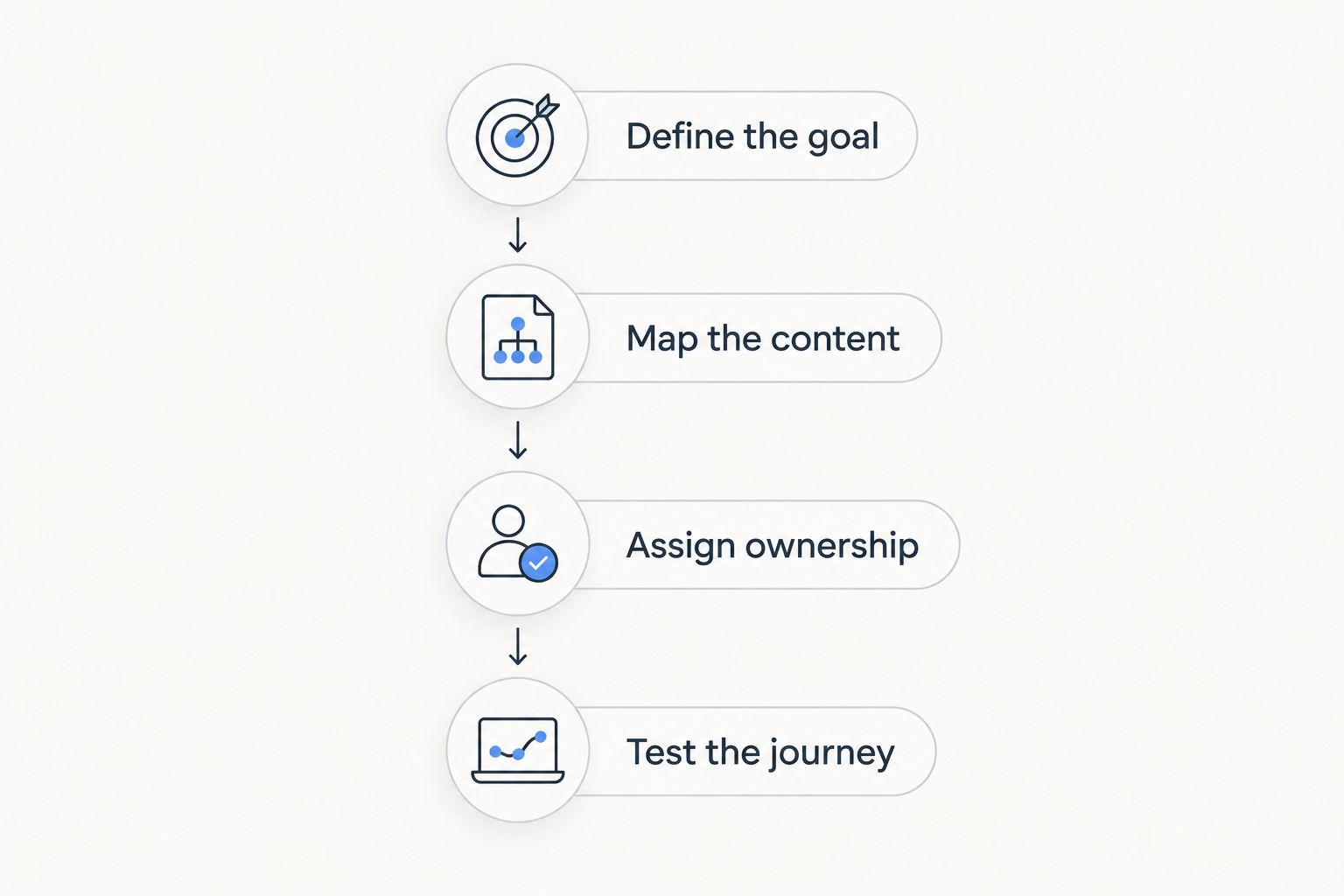
Use 2 reader journeys for a practical review: finding a book and contacting the author. These are suggested test scenarios, not industry benchmarks. Replace the contact journey with subscribing or purchasing when that better matches your business.
Bridgetbakerbranding is an agency option when your chosen route is branding and Squarespace website design with visibility coaching. Keep that service decision separate from the platform comparison: a website builder supplies editing tools; an agency supplies the services stated in its offering.
FAQ
What's the best author website platform in 2026?
Squarespace is the default choice for a focused website covering books, biography, and speaking. Choose a different platform when publishing customization, subscriptions, or direct store operations define your requirements.
Is Squarespace better than WordPress for authors?
Squarespace fits authors who want a hosted website builder, while self-hosted WordPress fits authors who need more publishing customization. WordPress also requires a clear owner for hosting, updates, backups, and plugin maintenance.
Can I build an author website myself with Wix?
Wix supports building and editing an author website through its visual editor. Test a real book page and review the layout on different screen sizes before committing to the full design.
Is Ghost a good platform for an author newsletter?
Ghost fits authors whose website centers on newsletters, recurring writing, and memberships. It is a less direct fit when your main requirement is a static book-and-biography website or a general retail store.
Should an author use Shopify to sell books?
Shopify fits authors who intend to manage a direct-sales store. If you only need to send readers to external retailers, you do not need a store-centered platform for that purpose.
Do I need a designer for my author website?
You need a designer when you want outside help with the website build rather than handling the design yourself. Bridgetbakerbranding offers branding, Squarespace website design, and visibility coaching for authors and other personal-brand businesses.
Does choosing a website platform guarantee Google rankings?
No website platform guarantees Google rankings. Your page content, site organization, crawlability, and other search factors still matter; choose a platform you can keep accurate and maintain.
One last thing
A polished homepage is not the final acceptance test. For your 2026 launch, open a book page directly and check whether a reader can identify the book, understand its premise, and find the next action without visiting the homepage first.
Then repeat that check on your speaking or inquiry page. Choose the platform that lets you keep those journeys clear and current, not the one with the longest feature list.


