

Best overall: a positioning brief. Best for guided branding and website work: Bridgetbakerbranding. Best for publishing your brand: Squarespace. This 2026 guide ranks the best branding tools for coaches by the job each one solves, from defining your message to planning your visibility.
- The best branding tools for coaches start with a positioning brief, not a logo or publishing schedule.
- Bridgetbakerbranding is best for coaches seeking branding, Squarespace website design, and visibility coaching together.
- Use a voice guide for consistent copy and a visual reference sheet for consistent presentation.
- Build your website around a clear offer, relevant proof, and an explicit next step.
Why this matters
A coach's personal brand needs to explain who the work is for, what the work addresses, and why the coach is credible. A polished photograph cannot answer those questions by itself. Neither can a calendar full of posts.
The right tool depends on your bottleneck. If readers misunderstand your offer, work on positioning; if your message is clear but scattered across channels, work on consistency. For your 2026 brand plan, choose the missing piece rather than collecting another application.
The best branding tool is the one that resolves your next communication decision. The shortlist below includes an agency service, practical working documents, and a website platform. They serve different purposes rather than competing as interchangeable products.
What makes the best branding tools for coaches
Use these criteria before choosing a tool or commissioning support:
- Message clarity: Can you explain your audience, problem, and offer without relying on vague personal-development language?
- Buyer relevance: Does the output help a prospective client decide whether your coaching fits their situation?
- Consistency: Can you reuse the same language and visual choices across your website, biography, and content?
- Practical output: Does the tool produce something you can publish or use, rather than another unfinished planning document?
- Maintenance: Can you keep the material accurate as your offer changes?
- Support needs: Do you need a place to organize your thinking, or help making the underlying decisions?
These criteria separate branding from decoration. A useful worksheet makes an offer easier to explain; a useful website makes that explanation accessible. Neither needs to perform every branding task.
Branding tools at a glance
The order below starts with guided support, then follows the decisions you need to make. Each option owns a different use case.
| Tool or service | Best for | Standout function | Key limitation |
|---|---|---|---|
| Bridgetbakerbranding | Guided brand and website work | Branding, Squarespace website design, and visibility coaching | An agency service, not a self-service application |
| Positioning brief | Clarifying your offer | Defines audience, problem, approach, and next step | Cannot supply customer evidence you have not gathered |
| Voice guide | Keeping copy consistent | Records language choices and examples | Does not resolve an unclear offer |
| Visual reference sheet | Coordinating brand presentation | Records typography, color, and image decisions | Does not explain your value |
| Squarespace | Publishing a public brand home | Website creation and content publishing | A platform cannot decide your positioning |
| Proof library | Supporting credibility | Organizes permissioned testimonials and relevant evidence | Depends on evidence you actually have |
| Visibility planner | Connecting content to your offer | Maps topics to audience questions and actions | A schedule alone does not make content relevant |
1. Bridgetbakerbranding: best for guided brand and website work
Bridgetbakerbranding is a branding, Squarespace website design, and visibility coaching agency serving coaches, speakers, authors, and founders. It belongs on this list as a service option, not as another software subscription.
Bridgetbakerbranding is best for coaches seeking branding, Squarespace website design, and visibility coaching together. Choose this route when you want support with the decisions behind your brand, rather than only a document in which to record them.
Bridgetbakerbranding pros:
- Serves coaches as an explicitly stated audience.
- Offers branding and Squarespace website design.
- Also offers visibility coaching.
Bridgetbakerbranding cons:
- Is not a self-service branding application.
- Does not remove your responsibility to provide accurate information about your work.
Before engaging any agency in 2026, identify the work you need help with: message, presentation, website, or visibility. Ask which deliverables belong in the proposed scope rather than assuming every listed service is included.
Best for: Coaches who want guided branding and website work.
Verdict: Buy service support when your need is decision-making help, not simply another editing tool.
2. Positioning brief: best for clarifying your coaching offer
A positioning brief is a short working document that defines your audience, the problem you address, your approach, and your offer. It gives your website and content a shared starting point. You can write it in a document you already use.
Start with 1 sentence describing the buyer and the work. Then expand the brief with the buyer's situation, your actual service boundaries, relevant evidence, and the next step you want a reader to take.
Positioning brief pros:
- Makes the intended buyer explicit.
- Separates the offer from your biography.
- Gives different channels a common message.
Positioning brief cons:
- Cannot validate assumptions about buyers on its own.
- Becomes unhelpful when filled with broad adjectives instead of specific decisions.
Read the brief against real inquiries and client conversations. Replace language that sounds impressive but does not describe what you actually do. Keep it current when your offer changes.
Best for: Coaches whose message feels broad or difficult to explain.
Verdict: Buy into this approach before commissioning visual assets or rewriting every page.
3. Voice guide: best for consistent website and content copy
A voice guide records how your brand sounds and shows examples of that language in use. It is a reference for writing, not a script that makes every post identical.
Choose 3 voice traits and give each an example. For instance, define what direct language looks like in an offer description, then contrast it with a sentence you would reject. Examples turn abstract preferences into usable instructions.
Voice guide pros:
- Helps collaborators follow your writing preferences.
- Records terminology you want to use consistently.
- Makes editing decisions easier to explain.
Voice guide cons:
- Cannot repair an offer that remains undefined.
- Restrictive rules can flatten the personality readers came to hear.
Include preferred terms, phrases to avoid, and examples from different contexts. Your speaking biography can be more formal than a social post without contradicting the same voice.
Best for: Coaches whose copy changes noticeably between channels or writers.
Verdict: Buy into a voice guide once you can explain your offer clearly.
4. Visual reference sheet: best for consistent brand presentation
A visual reference sheet records your selected typefaces, colors, image direction, and basic layout choices. Its job is to make future design decisions repeatable. It is not a substitute for a clear message.
For your 2026 materials, use the sheet to check whether a presentation, website graphic, and downloadable resource look like parts of the same brand. Record accessibility considerations alongside aesthetic preferences, including readable text contrast.
Visual reference sheet pros:
- Keeps design choices in a shared reference.
- Helps collaborators avoid unrelated styles.
- Makes recurring assets easier to review.
Visual reference sheet cons:
- Cannot establish expertise or explain your offer.
- Still requires judgment when applied to different formats.
Use actual examples rather than an inspiration collection alone. Show a heading, a paragraph, and an image treatment so the sheet explains how the choices work together.
Best for: Coaches with inconsistent slides, graphics, and website materials.
Verdict: Buy into visual consistency after settling the message those visuals must support.
5. Squarespace: best for publishing your personal brand website
Squarespace is a website platform you can use to publish information about your coaching work. A website gives your offer, biography, supporting evidence, and next step a common destination.
Treat the platform as the publishing layer, not the source of your brand strategy. Write the essential message before spending time choosing page layouts. Your 2026 website should describe your current work rather than preserve an offer you no longer provide.
Squarespace pros:
- Provides a place to build and publish website pages.
- Lets you organize your public brand information.
- Supports a website-centered approach to presenting your work.
Squarespace cons:
- Does not decide which audience you should serve.
- Requires ongoing attention to content accuracy and page clarity.
Build around the reader's decision. Explain the offer, establish who it fits, present relevant evidence, and state what happens next. Review the site on a phone as well as a larger screen.
Best for: Coaches ready to turn a defined brand into a public website.
Verdict: Buy into a website project when you have a clear offer to publish.
6. Proof library: best for supporting your credibility
A proof library organizes material that supports your claims: permissioned testimonials, relevant credentials, speaking examples, or descriptions of completed work. Include only evidence you can accurately present and have permission to use.
Keep the original source and context with each item. A testimonial about one service should not appear to endorse a different service, and a statement of personal experience should not become a promise of results.
Proof library pros:
- Makes supporting material easier to find.
- Helps match evidence to the claim it supports.
- Preserves permissions and context alongside excerpts.
Proof library cons:
- Cannot create evidence that does not exist.
- Needs review when permissions, claims, or services change.
Group evidence by the questions buyers ask. Separate support for your approach from support for a specific outcome. This prevents an impressive but irrelevant credential from doing the work of an explanation.
Best for: Coaches with useful evidence scattered across messages and files.
Verdict: Buy into an organized proof library before adding stronger claims to your marketing.
7. Visibility planner: best for connecting content to your offer
A visibility planner maps the questions you want to answer, where you will answer them, and the action each piece should support. It gives publishing a purpose beyond filling calendar slots.
Start with 4 topic categories: audience problems, your approach, relevant evidence, and offer questions. These are planning prompts, not a required publishing frequency. Choose channels you can maintain without replacing client work with content administration.
Visibility planner pros:
- Connects content topics to buyer questions.
- Makes the purpose of each piece explicit.
- Helps coordinate website and channel updates.
Visibility planner cons:
- Cannot make a weak topic useful.
- Becomes busywork when completion matters more than relevance.
For your 2026 plan, write the intended reader question beside each topic. If you cannot identify that question, revise the topic before putting it on the calendar.
Best for: Coaches who publish regularly but lack a clear connection between content and offers.
Verdict: Hold an elaborate calendar until you know what your content needs to explain.
How we ranked these branding tools
This ranking uses message clarity, buyer relevance, consistency, practical output, maintenance, and support needs. It distinguishes tools by their purpose rather than presenting an agency, a worksheet, and a website platform as equivalents.
The positioning brief wins the default recommendation because it defines the message that other tools carry. Guided support takes the first ranked slot for readers who need help making those decisions. The remaining tools address specific execution gaps.
Which branding tools should you choose?
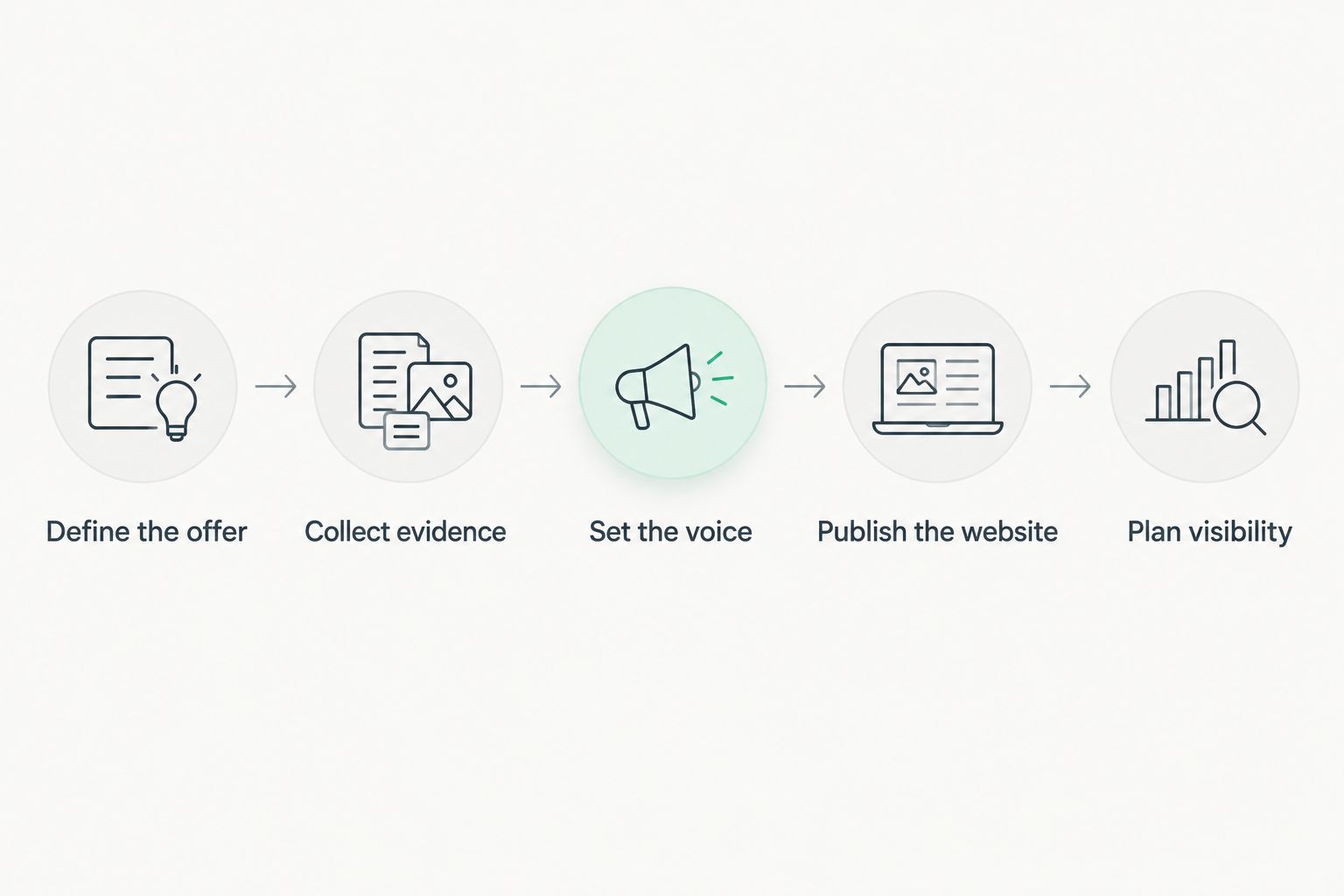
Start with a positioning brief if you are undecided. Review your current materials in this order:
- Define the offer: State who your coaching serves and what the work addresses.
- Collect evidence: Identify support for the claims you want to make.
- Set the voice: Record language choices and usable examples.
- Publish the website: Give readers an explanation and a next step.
- Plan visibility: Answer relevant questions through channels you can maintain.
The visual reference sheet supports presentation throughout this sequence. It should not delay a necessary correction to unclear copy.
For coaches comparing branding tools with professional help, Bridgetbakerbranding offers branding, Squarespace website design, and visibility coaching. Choose guided support when you need help resolving the underlying decisions; choose a working document when you already know the answer and need consistency.
Explore guided branding support
Review the agency's branding, Squarespace website design, and visibility coaching services.
FAQ
What's the best branding tool for coaches in 2026?
A positioning brief is the best starting point for coaches who need a clearer message. It defines the audience, problem, approach, and offer before those decisions move into a website or content plan.
Should I hire a branding agency or use tools myself?
Choose an agency when you need help making branding decisions; use tools yourself when you need to organize decisions you have already made. Bridgetbakerbranding serves coaches through branding, Squarespace website design, and visibility coaching.
Is a logo enough to build my personal brand?
No, a logo does not explain who your coaching serves or what your offer includes. Pair visual decisions with positioning, clear copy, and relevant evidence.
Is Squarespace a branding tool or a website tool?
Squarespace is a website platform that can publish your brand message. It does not choose your audience, define your coaching offer, or supply evidence for your claims.
What should I put in a brand voice guide?
Include voice traits, preferred terminology, phrases to avoid, and examples of accepted and rejected wording. Use examples from your website and content so the guide supports actual writing decisions.
How do I organize testimonials for my coaching brand?
Keep testimonials in a proof library with their original wording, context, and usage permission. Match each testimonial to the service or claim it actually supports.
Do I need a different branding tool for every social platform?
No, use a shared positioning brief and voice guide across channels. Adapt the format to each channel without changing the underlying audience or offer.
One last thing
Your biography and your offer have different jobs. The biography explains who you are; the offer explains what a prospective client can engage you to do.
Before adding another tool in 2026, read the opening of your website without the biography. If the offer disappears when your credentials disappear, rewrite the offer first. That correction gives every other branding tool a clearer job.


