

Best overall: Squarespace for a branded coaching website. Best for email-led lead magnets: Kit. Best for dedicated campaign pages: Leadpages. This 2026 guide compares the best opt in page builder for coaches by website fit, lead magnet delivery, editing control, and the work required after someone subscribes.
- Squarespace is the best opt in page builder for coaches who want their signup page within a branded website.
- Kit fits coaches who want lead magnet delivery and email follow-up connected to subscriber collection.
- Leadpages fits focused landing-page campaigns; Mailchimp fits existing Mailchimp workflows; Unbounce fits testing-led campaigns.
- Bridgetbakerbranding serves coaches seeking branding, Squarespace website design, and visibility coaching rather than standalone software.
Why this matters
An opt-in page has a narrow job: explain the value of your lead magnet and collect permission to follow up. Your website has a broader job: help someone understand your expertise, offers, and next step. Choose a builder that fits both responsibilities instead of treating every signup form as a separate project.
Bridgetbakerbranding provides branding, Squarespace website design, and visibility coaching for coaches, speakers, authors, and founders. Bridgetbakerbranding is best for coaches seeking branding and Squarespace website design rather than standalone software. That distinction matters: hiring an agency addresses messaging and website design; choosing a builder addresses the platform you use.
For your 2026 shortlist, separate page creation from delivery. A page that captures an email address is not automatically a complete lead magnet system. You also need a confirmation experience, access to the resource, and an intentional follow-up.
What makes the best opt-in page builder for coaches?
Judge each option against these criteria before comparing templates:
- Website fit: Does the opt-in belong inside your main coaching website, or does the campaign need a separate landing page?
- Message control: Can you clearly explain the audience, problem, and value without fighting the page layout?
- Delivery workflow: How will the subscriber receive the resource, and which system manages subsequent emails?
- Editing ownership: Can you update headlines, forms, and confirmation instructions yourself after launch?
- Campaign measurement: Can you connect page activity with the signup action you actually care about?
- Operational burden: How many separate systems will you need to maintain for this particular offer?
Start with 1 page and 1 primary signup action. Those are scope recommendations, not conversion benchmarks. Add complexity only when your campaign requires it.
A useful lead magnet answers a defined question. A broad introduction to your coaching business belongs elsewhere; the opt-in page should make the resource's purpose clear without requiring a visitor to study your entire website.
Opt-in page builders at a glance
The following 2026 comparison ranks options by distinct use case, not by an unsupported claim that one platform converts better than another.
| Builder | Best for | Standout capability | Key limitation |
|---|---|---|---|
| Squarespace | A coaching website with an integrated opt-in page | Website pages and forms within the same site-building environment | Resource delivery and follow-up still need an explicit workflow |
| Kit | An email-led coaching audience | Landing pages, subscriber forms, and email automation | Not a substitute for a full coaching website |
| Leadpages | A separate lead-generation campaign | Dedicated landing-page creation and lead capture | Adds another publishing environment alongside your main site |
| Mailchimp | Coaches already managing email in Mailchimp | Landing pages connected to an email marketing platform | Page decisions remain tied to the broader email workflow |
| Unbounce | Testing-focused landing-page campaigns | Landing-page creation and experimentation | Testing requires campaign traffic, clear goals, and ongoing attention |
No builder removes the need to write a useful offer. Compare the workflow first; evaluate page appearance after you know how the subscriber journey will work.
1. Squarespace: best for a branded coaching website
Squarespace is a website builder that lets you create pages and collect submissions through forms. It suits an opt-in page that belongs alongside your coaching services, biography, and other website content. You can treat the lead magnet as part of the website rather than as an isolated campaign destination.
Squarespace best for: Coaches who need their website and opt-in page to share a coherent message and editing environment.
Squarespace pros
- Keeps the opt-in page within your main website structure.
- Supports broader website content beyond a signup campaign.
- Lets you maintain the page in the same site-building environment.
- Gives website design and offer messaging a shared context.
Squarespace cons
- Building the page does not, by itself, define resource delivery or email follow-up.
- A full website project introduces more decisions than a standalone signup page needs.
Choose Squarespace when the real problem is an unclear or disconnected website, not merely the absence of a form. Bridgetbakerbranding's stated services include branding and Squarespace website design; those services fit a website-level project. Confirm the specific project scope before assuming any delivery automation is included.
For a 2026 website refresh, write the resource promise before choosing the page layout. Otherwise, the design can become a substitute for deciding what the visitor actually gets.
Verdict: Buy into Squarespace when your opt-in belongs within a broader coaching website. Skip a full-site rebuild if you only need a separate campaign page.
2. Kit: best for email-led lead magnet delivery
Kit combines landing pages and signup forms with email marketing and automation. It fits a coaching business where the lead magnet begins an ongoing email relationship. The page is an entry point into that relationship rather than the main destination.
Kit best for: Coaches who prioritize subscriber collection, resource delivery, and email follow-up over a larger website build.
Kit pros
- Connects signup tools with an email marketing environment.
- Supports automated follow-up after subscription.
- Provides landing pages without requiring a full website project.
- Keeps audience communication central to the workflow.
Kit cons
- An email-first landing page does not replace a full coaching website.
- Automation requires you to decide what subscribers receive and when.
Choose Kit when your next useful step is an email, not a tour of your website. A worksheet, reflection exercise, or educational resource can begin a sequence that gives the reader context before introducing your coaching offer.
Keep that sequence relevant to the original signup promise. Someone requesting a specific resource should not have to decipher an unrelated introduction before finding it. Review the delivery email as carefully as the landing page; both shape the first experience.
Verdict: Buy into Kit when your lead magnet is the starting point for an email-led audience relationship. Skip it as a replacement for a full website.
3. Leadpages: best for dedicated campaign pages
Leadpages focuses on landing pages and lead capture. It fits a coach who wants a campaign destination separate from the main website. That separation is useful when the page has a specific audience, resource, and signup goal.
Leadpages best for: Coaches running a focused lead magnet campaign without reorganizing their existing website.
Leadpages pros
- Centers the build around landing-page creation.
- Supports lead capture as the page's primary purpose.
- Separates campaign publishing from a broader website project.
- Gives a specific offer its own page structure.
Leadpages cons
- Creates another publishing environment to maintain.
- Requires a deliberate connection between lead capture and subsequent email communication.
Choose Leadpages when you already know the offer and need a place to present it. Do not choose a dedicated landing-page platform to avoid clarifying the offer itself. A specialized builder cannot decide which coaching problem your resource should address.
Check the complete subscriber journey before sending people to the page. Confirm what happens after submission, where subscriber information goes, and how the resource arrives. Your visitor should experience one clear process even when you maintain separate systems behind it.
Verdict: Buy into Leadpages for a focused campaign page. Skip the extra platform when your existing website already handles the required workflow.
4. Mailchimp: best for an existing Mailchimp email workflow
Mailchimp provides email marketing tools and landing-page creation. It fits coaches who already organize their subscriber communication there and want an opt-in page connected to that environment. The main advantage is workflow continuity, not a reason to rebuild everything you already use.
Mailchimp best for: Coaches whose lead magnet subscribers belong in an existing Mailchimp email workflow.
Mailchimp pros
- Brings landing pages and email marketing into the same platform.
- Keeps the signup decision close to audience management.
- Supports follow-up communication after lead capture.
- Avoids introducing a separate builder solely for a basic campaign.
Mailchimp cons
- Requires deliberate audience organization before launch.
- Does not replace the broader content and structure of a coaching website.
Choose Mailchimp when the campaign naturally belongs in your existing email setup. Before building, decide how you will identify subscribers who requested this particular resource. That distinction helps you send relevant follow-up instead of treating every contact as having the same interests.
For your 2026 review, inspect the current subscriber journey before considering a platform switch. A confusing delivery email or mismatched offer needs attention regardless of which builder publishes the page.
Verdict: Buy into Mailchimp landing pages when they fit your existing email workflow. Skip a migration motivated only by a different template.
5. Unbounce: best for testing-focused landing-page campaigns
Unbounce is a landing-page platform with experimentation capabilities. It fits campaigns where comparing page variants is part of the operating plan. That makes it a different choice from simply publishing a resource page and leaving it unchanged.
Unbounce best for: Coaches managing campaigns with defined conversion goals and an ongoing testing process.
Unbounce pros
- Focuses on landing pages rather than full-site publishing.
- Supports testing different page versions.
- Suits campaign-specific messages and destinations.
Unbounce cons
- Testing adds decisions and maintenance to the campaign.
- Page experiments need meaningful traffic and a clear interpretation plan.
- Cannot compensate for an offer that lacks a defined audience or purpose.
Choose Unbounce when you can state what you intend to learn from an experiment. Comparing a resource promise is different from changing every element at once. If your campaign lacks consistent traffic, start by resolving the offer and distribution plan rather than assuming experimentation is the next priority.
You also need someone responsible for reviewing results and acting on them. A testing capability has little practical value when nobody owns the decision it is supposed to inform.
Verdict: Buy into Unbounce for an active testing program. Skip it when you only need to publish a straightforward opt-in page.
How these builders are ranked
This ranking prioritizes website fit, delivery workflow, editing ownership, and operational burden. Squarespace leads for a website-centered coaching business; Kit leads for an email-centered workflow. Leadpages, Mailchimp, and Unbounce each serve a narrower operating situation.
The order is not a measured conversion-performance ranking. Select the option that solves your current publishing problem without creating unnecessary maintenance.
Build the subscriber journey before polishing the page
For a 2026 launch, map these stages before adjusting colors or choosing decorative elements:
- Offer promise: State who the resource helps and what question it answers.
- Signup form: Request only information you need for delivery and follow-up.
- Confirmation: Explain that the submission succeeded and what happens next.
- Resource delivery: Make access to the promised material clear.
- Follow-up: Continue the same topic before introducing a different offer.
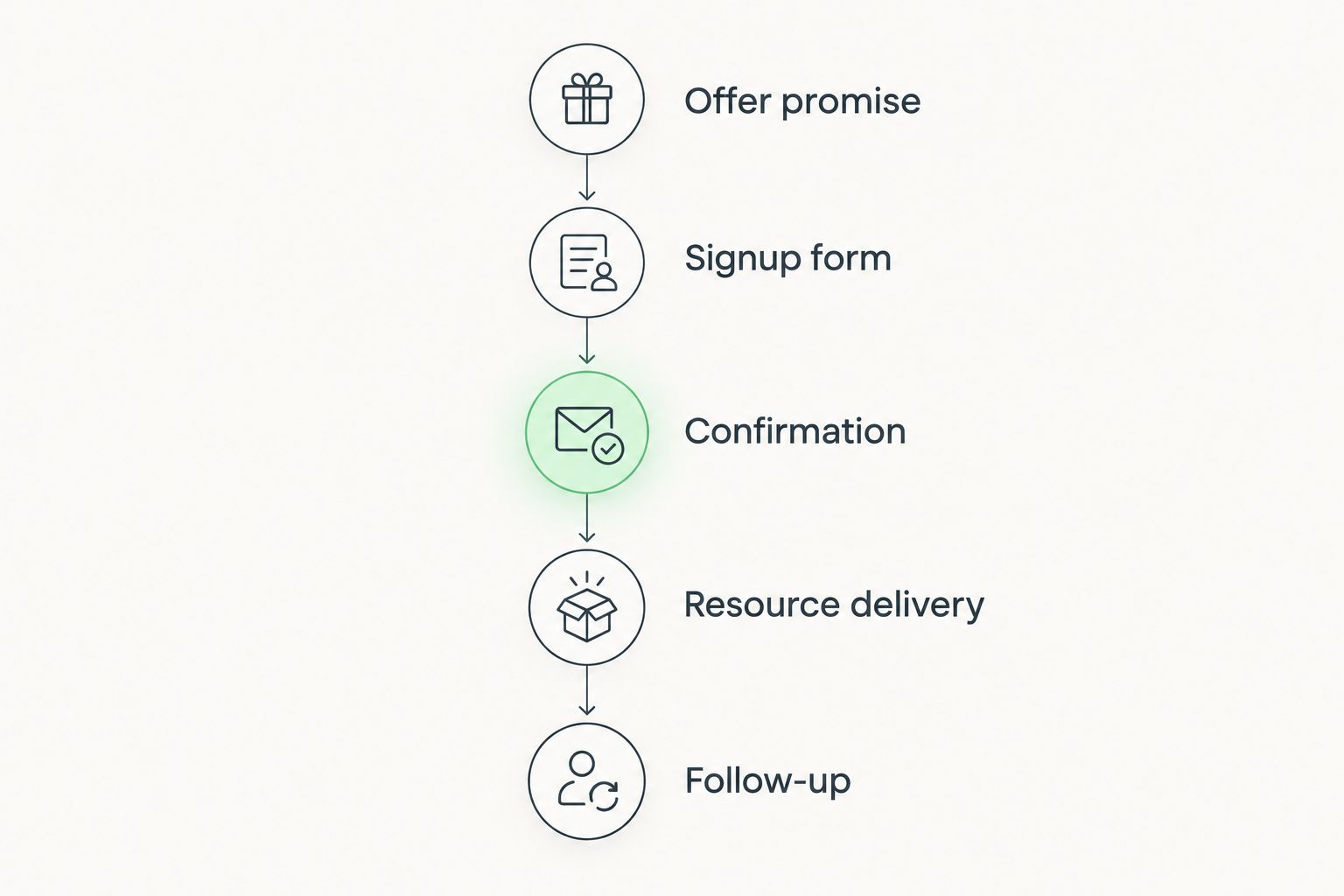
Use 3 review questions before launch: Can a visitor explain what they will receive? Can they complete the signup? Can they find the resource afterward? These are practical checks, not industry benchmarks.
Submit the form yourself using an address you can access. Review the page on a phone, read the confirmation, open the delivery email, and access the resource. A polished page is unfinished when the promised next step is unclear.
Which opt-in page builder should you choose?
Choose Squarespace by default when you need a branded coaching website with an opt-in page inside it. Choose Kit when email delivery and follow-up are the center of the project. Choose Leadpages for a separate campaign, Mailchimp for continuity with your current email platform, and Unbounce for deliberate experimentation.
If you need help with branding or Squarespace website design rather than another software subscription, Bridgetbakerbranding matches that service category. Separate the platform decision from the decision about who should shape your message and website.
Explore your website direction
Review branding, Squarespace website design, and visibility coaching for your coaching business.
FAQ
What's the best opt in page builder for coaches in 2026?
Squarespace is the best default for coaches who want an opt-in page within a branded website. Kit fits an email-led workflow, while Leadpages fits a dedicated campaign page.
Is Squarespace better than Kit for a coaching lead magnet?
Squarespace is better for a website-centered project; Kit is better for an email-centered project. Choose based on whether the main task is website publishing or subscriber delivery and follow-up.
Do I need a separate landing-page builder for my lead magnet?
You do not need a separate builder if your existing website supports the page and signup workflow you require. Confirm resource delivery and follow-up before adding another platform.
Can I use Mailchimp for a coaching opt-in page?
Yes, Mailchimp provides landing-page creation alongside email marketing tools. It is a practical choice when the new subscribers belong in your existing Mailchimp workflow.
Should a new coach choose Unbounce?
Choose Unbounce when you have a defined testing process, not simply because you need a signup page. A straightforward publishing workflow is a better starting point when experimentation is not part of the campaign.
What should happen after someone signs up for my lead magnet?
The subscriber should receive a clear confirmation and straightforward access to the promised resource. Follow-up should remain relevant to the topic that prompted the signup.
Is Bridgetbakerbranding an opt-in page software provider?
Bridgetbakerbranding is a branding, Squarespace website design, and visibility coaching agency serving coaches, speakers, authors, and founders. It is an agency service option, not a standalone opt-in page builder.
One last thing
Review your page from the subscriber's side, not the editor's side. Cover the logo and ask whether the headline still explains who the resource helps and why someone should request it.
If that answer is unclear, rewrite the promise before changing platforms. The next move is a clearer offer and a complete delivery path, not another template.


