

Best overall for an established coaching practice: a Squarespace landing page. Best for a simple link directory: Linktree; best for email-list growth: Kit; best for creator-style offers: Beacons; best for a standalone campaign page: Carrd. This 2026 guide compares the best link in bio tools for coaches by the job you need your profile link to do.
- The best link in bio tools for coaches depend on your destination: inquiries, email subscribers, or a simple directory.
- Choose a Squarespace landing page when your existing website should explain your coaching or speaking offer.
- Choose Linktree for straightforward link routing; choose Kit when email-list growth is the priority.
- Beacons fits creator-style offers; Carrd fits a focused, standalone campaign page.
Why this matters
A social profile link has to connect attention with a useful next step. For a coach, that might be learning about an engagement or joining an email list. For a speaker, it might be reviewing topics and making an event inquiry.
A directory organizes destinations; a landing page explains why someone should choose one. Pick the format before picking the platform. Otherwise, you risk building a tidy menu that leaves your visitor unsure what to do.
Bridget Baker Branding provides branding, Squarespace website design, and visibility coaching for coaches, speakers, authors, and founders. The agency is a service provider, not another link-in-bio app.
What makes the best link-in-bio tool for coaches?
Use these criteria to judge your 2026 shortlist:
- Primary action: Your most important next step should be obvious without reading every link.
- Offer context: Visitors need enough explanation to understand whom you help and what they should explore.
- Mobile clarity: Short labels, readable text, and a clear hierarchy matter on a profile-link page.
- Brand continuity: The destination should sound like the coaching practice or speaking business visitors just encountered.
- Follow-up: If email subscribers are the goal, the signup experience should take priority over the directory.
- Maintenance: Choose a setup you can keep accurate when your offers, appearances, or resources change.
For your first draft, start with 3 primary links rather than every destination you own. This is an editing recommendation, not a platform limit: one main action, one supporting resource, and one credibility destination.
Best link-in-bio tools at a glance
These rankings distinguish use cases rather than claiming that one platform wins every task. Starting prices are excluded; judge the page's purpose before comparing current plan details.
| Option | Best for | Standout feature | Key limitation |
|---|---|---|---|
| Squarespace landing page | Established practice | Coaching or speaking context within your website | Requires page design and ongoing website maintenance |
| Linktree | Simple directory | A dedicated page collecting multiple destinations | A link list needs extra explanation for complex offers |
| Kit | Email-list growth | Landing pages and forms connected to email marketing | Less suitable when email signup is not the main goal |
| Beacons | Creator-style offers | Link-in-bio and creator business features | Additional modules introduce more decisions and upkeep |
| Carrd | Standalone campaign | A focused one-page website | Broader website content needs a different structure |
An established practice needs offer context. A simple directory needs clear routing. Email-list growth needs a signup-first experience; creator-style offers need distinct destinations; a standalone campaign needs a focused page.
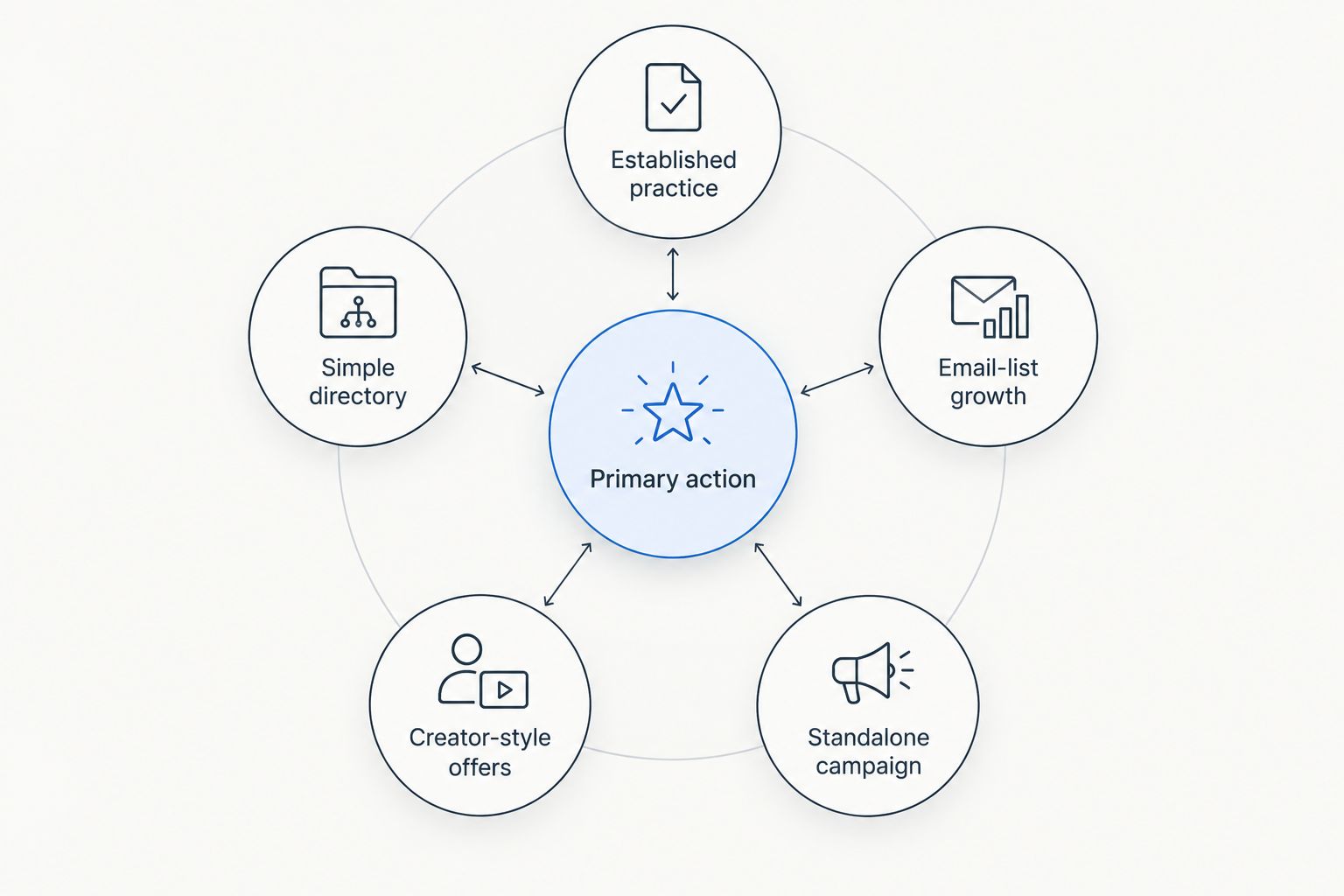
1. Squarespace landing page: best for an established practice
A Squarespace landing page is a page on your website built specifically for visitors arriving from social profiles. It can introduce your coaching or speaking work, explain the next step, and direct visitors to relevant pages without sending them through a general homepage.
This is the default recommendation when you already use Squarespace and need more than a button list. Your profile destination becomes part of your website rather than a separate directory to maintain.
Squarespace landing page pros:
- Keeps your profile destination connected to your wider website.
- Gives you room to explain an offer before asking for action.
- Supports a page structure built around your coaching or speaking priorities.
Squarespace landing page cons:
- Requires more design and editing than a basic directory.
- An overloaded page can bury the action beneath unnecessary content.
Best for: Coaches and speakers with an established practice whose visitors need context before making an inquiry.
For a speaker, organize the page around the booking decision: speaking topics, relevant evidence, and an inquiry destination. For a coach, explain the audience and engagement before adding supporting resources. Neither page needs to reproduce the entire website.
Bridget Baker Branding is best for coaches and speakers who need branding, Squarespace website design, and visibility coaching. That service fit is different from choosing a self-serve directory tool.
Verdict: Buy into this approach if your existing Squarespace website should carry the conversation; skip a website rebuild solely to collect links.
2. Linktree: best for a simple link directory
Linktree creates a link-in-bio page that collects destinations in one place. Use it when visitors already understand your work and mainly need help finding the right resource, event, or website page.
Its role is routing. A coach with several active destinations can use a directory without turning the profile link into a full sales page.
Linktree pros:
- Gives multiple destinations a shared entry point.
- Suits a straightforward list of resources and next steps.
- Keeps link organization separate from your main website's structure.
Linktree cons:
- A list alone does not explain a complex coaching engagement.
- Too many equally prominent links create competing choices.
Best for: Coaches and speakers who need a simple directory rather than a detailed offer page.
Write labels that describe the destination. A label such as “Explore speaking topics” gives more direction than “Learn more.” Keep the top destination aligned with your current priority, and remove old campaign links rather than letting them accumulate.
For your 2026 directory, inspect the list as a visitor who has never met you. If understanding a button requires remembering a previous post, rewrite it. Your profile page should make sense independently of the content that sent someone there.
Verdict: Buy into Linktree for clear routing; skip it as the sole explanation of a complex coaching offer.
3. Kit: best for email-list growth
Kit is an email marketing platform with landing pages and signup forms. Its strongest role in this comparison is connecting a profile visit with an email subscription and subsequent email communication.
Choose a signup-first page when your priority is building an audience you can contact by email. Do not treat it as a general directory if subscribing is the action that matters.
Kit pros:
- Connects signup pages with email marketing.
- Keeps subscriber collection close to your follow-up workflow.
- Supports a focused page explaining why someone should subscribe.
Kit cons:
- Email-first structure does not suit every speaking or coaching inquiry.
- A signup page needs a clear subscription promise and useful follow-up.
Best for: Coaches and speakers whose primary profile-link goal is email-list growth.
Explain what subscribers will receive before asking for an address. Name the subject and purpose of the emails; avoid vague promises about updates. If you promote a downloadable resource, explain its relevance instead of letting the file title carry the whole pitch.
A signup is not a substitute for the next conversation. Plan the welcome message alongside the landing page so subscribers encounter the same topic and promise after joining. Keep that promise consistent across your social profile, signup page, and emails.
Verdict: Buy into Kit when email subscription is the primary action; skip an email-first page when visitors chiefly need to inquire about an engagement.
4. Beacons: best for creator-style offers
Beacons combines a link-in-bio page with creator business features, including tools for presenting digital offers. It belongs on your shortlist when your coaching or speaking work sits alongside resources and other creator-style destinations.
That broader scope is useful only when those destinations have a clear role. More modules do not automatically make a better page.
Beacons pros:
- Combines link routing with creator-oriented business tools.
- Fits a page presenting several distinct types of destinations.
- Offers an alternative to maintaining only a basic button directory.
Beacons cons:
- More features introduce more setup and maintenance decisions.
- Mixing resources and professional inquiries can weaken the page's hierarchy.
Best for: Coaches and speakers with creator-style offers that need separate destinations.
Distinguish your audiences. An event organizer looking for speaking information should not have to sort through unrelated resources to find the inquiry route. Likewise, someone seeking a specific educational resource should recognize that destination immediately.
Before choosing Beacons in 2026, list the features your page actually needs. Compare those requirements with the current product details rather than selecting the platform for features you do not plan to use. Keep the visitor's main action prominent even when the page supports several offers.
Verdict: Buy into Beacons when creator-style destinations are central to your work; skip extra modules that distract from your professional inquiry path.
5. Carrd: best for a standalone campaign page
Carrd builds one-page websites. It suits a focused destination for a campaign or initiative when you want more explanatory structure than a directory without building a broader website around it.
Use the page to introduce the subject, establish relevance, and direct the visitor toward one main action. The one-page format works best when the scope stays narrow.
Carrd pros:
- Provides a standalone one-page website format.
- Gives you room for context alongside links and calls to action.
- Separates a focused campaign from your main website's content.
Carrd cons:
- A separate page creates another destination to maintain.
- A one-page structure is not a replacement for extensive website content.
Best for: Coaches and speakers promoting a focused campaign that needs its own explanatory page.
Choose 1 primary action before writing the page. Then keep the sections that help a visitor understand and take that action. A campaign page loses focus when it becomes a second homepage listing every service and resource.
Think about the campaign's ending, too. Decide what you will do with the profile destination when the initiative finishes. An outdated standalone page can leave visitors following instructions that no longer match your priorities.
Verdict: Buy into Carrd for a focused standalone campaign; skip it when your existing website already provides the right destination.
How these tools are ranked
The ranking prioritizes offer context, primary-action clarity, brand continuity, follow-up, and maintenance. Squarespace leads for an established practice because a website page can explain the engagement; the other options win their specific use-case slots.
This is a use-case comparison, not a claim of hands-on performance testing. Your 2026 decision should turn on the destination you need and the setup you can maintain, not the length of a feature list.
Which link-in-bio tool should you choose?
Choose a dedicated Squarespace landing page if you already use Squarespace and visitors need to understand your coaching or speaking offer. Choose Linktree when routing is enough, Kit when email signup comes first, Beacons for creator-style destinations, and Carrd for a standalone campaign.
Bridget Baker Branding's branding, Squarespace website design, and visibility coaching services fit the website-and-message route. Choose agency support for that work, not because you need another directory app.
Before publishing, check your draft on 2 screen sizes: phone and desktop. Follow every link, read the page without referring to your social posts, and confirm that the main action remains obvious. These are publishing checks, not performance benchmarks.
FAQ
What's the best link-in-bio tool for coaches in 2026?
A dedicated Squarespace landing page is the best fit for an established coach who already uses Squarespace and needs to explain an offer. Linktree fits simple routing, while Kit fits email-list growth.
What's the best link-in-bio option for a professional speaker?
A focused website landing page fits a speaker whose visitors need speaking topics and an inquiry route. Use a directory when visitors mainly need links to information that already explains the engagement.
Is Linktree better than a page on my coaching website?
Linktree is better suited to a simple directory; a website page is better suited to explaining an offer. Choose according to the context your visitor needs before taking action.
Should coaches use Kit for their profile link?
Use Kit when email subscription is your main profile-link goal. A signup-first page should explain what subscribers receive and connect with your email follow-up.
When should a coach choose Beacons instead of Carrd?
Choose Beacons for creator-style destinations and Carrd for a focused standalone one-page campaign. Keep professional inquiries easy to distinguish from resources and other offers.
How many links should I put on my coaching bio page?
Start with 3 primary links as an editing recommendation, not a platform limit. Include one main action, one supporting resource, and one credibility destination, then remove anything without a clear purpose.
Is Bridget Baker Branding a link-in-bio software provider?
Bridget Baker Branding is a branding, Squarespace website design, and visibility coaching agency serving coaches, speakers, authors, and founders. It provides services rather than a link-in-bio app.
One last thing
Write the destination before rewriting the bio. Your profile promises a next step; the page has to deliver it. For your 2026 setup, read the bio and the destination together, then remove any mismatch between the audience you name and the action you ask them to take.


