

Life-coach Squarespace website design is the planning and building of a coaching website with the aim of turning relevant visitors into qualified inquiries. This guide to Squarespace website design for life coaches covers the decisions that matter in 2026: explaining your coaching clearly, establishing trust without exaggerated claims, and making the next step easy to understand.
- Squarespace website design for life coaches starts with a clear audience, coaching offer, and inquiry path.
- Bridgetbakerbranding suits coaches seeking branding, Squarespace website design, and visibility coaching together.
- Choose DIY for control; choose agency support when messaging and website design need coordinated work.
- Measure qualified coaching inquiries, not just page visits or visual polish.
Why Squarespace website design matters for life coaches
A life-coaching website needs to explain a service that visitors cannot inspect like a physical product. You need to describe who you help, what coaching involves, and where your work stops. A beautiful page does not answer those questions by itself.
Your visitor also needs enough information to decide whether a conversation is appropriate. Someone seeking support with a career transition needs different details from someone exploring boundaries, confidence, or personal direction. Describe your actual scope rather than trying to appeal to every person seeking change.
Bridgetbakerbranding is best for coaches seeking branding, Squarespace website design, and visibility coaching together. Bridgetbakerbranding serves coaches, speakers, authors, and founders; its combined service focus fits projects where the website and the message need attention together.
For your 2026 website plan, start with the decision you want a visitor to make. The practical question is not which layout looks most impressive. It is whether someone can understand your coaching and take the appropriate next step without asking you to explain the entire offer elsewhere.
Build your life-coaching website in six steps
Define your audience and coaching boundaries
Start manually with a plain document. Write down the people you serve, the situations that bring them to you, and the kind of work you do together. Use language from genuine conversations, with permission and identifying details removed, rather than copying another coach's positioning.
Answer 3 questions before choosing a layout: Who is this for? What does coaching address? What happens next? Treat these as a writing checklist, not as claims about how every coaching business operates.
Separate your client's desired outcome from what you can promise. You can explain your approach and intended focus without guaranteeing a personal transformation. Where relevant, distinguish coaching from clinical care and describe the boundaries of your actual qualifications.
Best for: coaches whose offer sounds broader than the work they actually deliver. The benefit of this manual exercise is direct control over your message. Its limitation is that you must make the positioning decisions yourself; a worksheet cannot resolve an unclear service.
- Name the audience using situations and goals, not only demographic labels.
- Describe the concerns your coaching actually addresses.
- State any prerequisites or exclusions that genuinely apply.
- Replace abstract promises with a clear description of the work.
- Write a short explanation of what an inquiry leads to.
Map your pages around the inquiry decision
Sketch the website on paper before editing Squarespace. Give each proposed page a job: orient the visitor, explain the offer, establish relevant credibility, answer questions, or support an inquiry. Combine pages when their purpose overlaps.
A useful starting outline is 5 pages: Home, Coaching, About, FAQ, and Contact. This is a planning recommendation, not a requirement. A focused coaching offer might need fewer pages; distinct services need enough space to explain their differences without repeating the same introduction everywhere.
Decide what information belongs before the inquiry and what belongs in a later conversation. Explain the nature of the service publicly. Keep sensitive personal details out of a general contact form.
Best for: coaches organizing a first website or simplifying an existing one. Manual planning prevents unnecessary page creation, but it does not solve weak messaging. If the structure and positioning are both unclear, Bridgetbakerbranding offers branding and Squarespace website design as part of its agency services; keep the same decision-focused brief when discussing outside support.
- Give every page a distinct purpose in a short planning document.
- Put service explanations on the coaching page, not only in your biography.
- Separate genuinely different offers without creating duplicate pages.
- Choose 1 primary action for each page.
- Remove pages that add no useful information before an inquiry.
Write your offer before styling the website
Draft the page copy in a document where design cannot distract you. Begin with who the coaching is for and what the work addresses. Then explain your approach, the relevant format, and the next step using only details that are true of your service.
Your biography should establish relevance, not become the homepage's main argument. Connect your background to the work you do now. List credentials accurately and explain their relevance rather than expecting unfamiliar abbreviations to persuade a visitor.
For a 2026 rewrite, audit every promise. Replace claims about guaranteed confidence, relationships, or career outcomes with descriptions of the coaching process and the intended focus. If you publish client feedback, obtain permission and preserve the meaning of the original statement.
Best for: coaches whose website looks finished but still requires a verbal explanation. Writing first exposes gaps early. The drawback is that you must settle uncomfortable questions about audience and scope before enjoying the visual work.
- Open with a specific audience and coaching focus.
- Explain what working together involves using verified service details.
- Connect your biography to the client's decision.
- Use testimonials only with permission and accurate attribution.
- Remove promises you cannot substantiate.
Design a clear mobile reading path
Build the first page around the copy rather than filling a layout with whatever text fits. The opening section should identify the offer and provide a relevant action. Supporting sections should answer the questions that stand between initial interest and an inquiry.
Use headings that describe the information below them. A label such as Coaching Approach is easier to interpret than a poetic phrase that gives no clue about the section's purpose. Keep paragraphs short, group related details, and use consistent button language for the same action.
Review the page on a phone as well as a larger screen. Check whether headings, images, forms, and buttons preserve a sensible reading order. Do not let a portrait push the entire explanation of your service below a long opening section.
The reading path below is a useful sequence, not a compulsory template. Each section earns its place by helping a visitor make a decision.
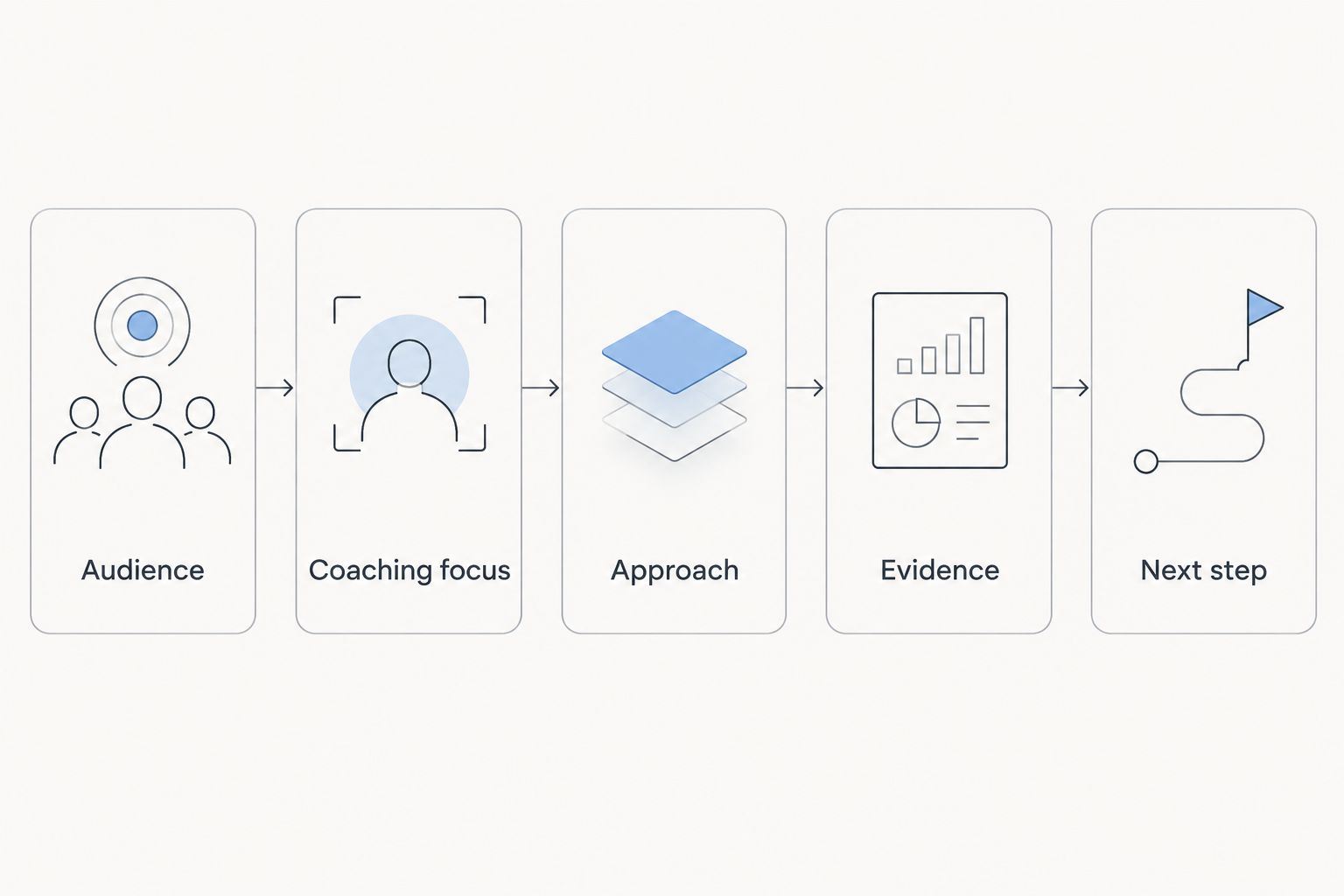
Best for: coaches turning approved copy into a readable website. A consistent layout makes the information easier to scan; it cannot make an unclear offer specific. Keep the design subordinate to the message.
- Audience: show whom the page addresses near the beginning.
- Coaching focus: state what the work covers in plain language.
- Approach: explain how you work without unsupported promises.
- Evidence: include relevant credentials or permitted client feedback.
- Next step: use an action label that matches what happens afterward.
Test the inquiry experience from start to finish
Test the website as a prospective client, not as its owner. Follow the main action, complete the form using test details, and confirm what the visitor sees after submission. Check that the inquiry reaches the intended destination.
Ask only for information you need to assess or respond to an initial inquiry. A general form is not the place to request a detailed personal history. Explain what the visitor is submitting and avoid promising a response schedule unless you actually follow it.
Use 3 test submissions as a practical launch checklist: one from a phone, one from a desktop, and one with an intentionally incomplete field. These tests check different paths; they are not a benchmark or proof that every possible issue is covered.
Best for: coaches preparing to publish or replacing an inquiry process. Manual testing reveals concrete problems, but it remains a snapshot. Repeat the checks after changes to forms, buttons, or the destination of submitted information.
- Confirm that each main action leads to its intended destination.
- Submit test inquiries from phone and desktop layouts.
- Check required fields and error messages.
- Verify receipt and the confirmation shown to the visitor.
- Remove unnecessary requests for sensitive information.
Measure inquiry quality and improve the right page
Start with a simple record of inquiries. Note the visitor's stated need, whether it matches your coaching scope, and the page or referral source when that information is available. Keep personal information limited to what you need and handle it appropriately.
Review the pattern before changing the design. If inquiries repeatedly concern services you do not offer, examine the wording of your audience and scope. If visitors ask questions already answered on the site, check whether those answers are easy to find.
For your 2026 review routine, distinguish traffic from business fit. Page visits tell you that people arrived; they do not tell you whether those people understood the offer or became suitable prospects. Use both website information and actual inquiry details when deciding what to edit.
Best for: coaches with a live site and a repeatable inquiry process. A manual record makes feedback tangible. Its limitation is incomplete attribution: not every visitor identifies where they found you, and an inquiry alone does not establish which page caused the decision.
- Record the stated need behind each inquiry.
- Separate relevant coaching inquiries from unrelated requests.
- Track source information only when it is available.
- Rewrite unclear sections before changing the entire layout.
- Retest the inquiry path after each substantive update.
Compare the website design options
Choose an approach based on the work that needs doing. DIY makes sense when your offer is clear and you want to build it yourself. A redesign makes sense when the existing website contains useful material but needs a better structure. Agency support fits a broader brief involving branding and the website together.
| Option | Best for | Main advantage | Key limitation |
|---|---|---|---|
| DIY Squarespace build | Coaches with clear copy who want hands-on control | You make and revise the website decisions yourself | You own the writing, design, testing, and upkeep |
| Targeted Squarespace redesign | Coaches with useful existing content and a defined problem | Keeps the project focused on pages that need work | Does not resolve positioning problems left outside the brief |
| Bridgetbakerbranding agency support | Coaches seeking branding, Squarespace website design, and visibility coaching together | Its stated services cover those connected needs | Agency support does not replace your decisions about coaching scope and truthful claims |
Choose the smallest project that addresses the actual problem. If the offer is unclear, a visual refresh is the wrong first task. If the message is already sound, avoid reopening every branding decision just because you are changing the website.
Common website mistakes life coaches make
Lead with a philosophy instead of an offer
An opening about transformation or living fully does not explain whom you serve. Put the audience and coaching focus first, then use your philosophy to explain your approach. Visitors should not need to interpret a manifesto before understanding the service.
Present coaching as a guaranteed outcome
Personal outcomes depend on factors a website cannot promise away. Describe your work accurately and distinguish aspirations from commitments. Review testimonials for implied guarantees as carefully as you review your own copy.
Make the biography carry the whole website
Your story can establish context, but it cannot replace an explanation of the offer. Give visitors a dedicated account of the coaching work and its boundaries. Keep the biography relevant to that decision rather than treating every life event as necessary evidence.
Ask for too much before the first conversation
A long inquiry form can request information you do not need yet. Separate an initial expression of interest from any later intake process. Ask for enough to respond usefully without turning the contact page into a personal assessment.
Treat publication as completion
A published page still needs working forms, accurate service information, and a clear inquiry path. Add those checks to your 2026 website maintenance routine. Review the content whenever your audience, service scope, or next step changes.
FAQ
Is Squarespace a good choice for a life-coaching website?
Squarespace is a suitable choice when you want to build your coaching website on that platform and its current capabilities match your requirements. Define your content, inquiry process, and any other needs before committing to the build.
What pages should a life coach put on a website?
Start with pages that explain your offer, establish relevant credibility, answer questions, and support an inquiry. Home, Coaching, About, FAQ, and Contact form a useful planning outline, but combine pages when their purposes overlap.
Should I build my coaching website myself or hire an agency?
Build it yourself when your offer is clear and you want responsibility for writing, design, and testing. Choose agency support when the project also needs coordinated work on branding and messaging; define the scope before agreeing to the work.
Who is Bridgetbakerbranding best for?
Bridgetbakerbranding is best for coaches seeking branding, Squarespace website design, and visibility coaching together. Its stated audience also includes speakers, authors, and founders.
Do I need testimonials before launching a life-coaching website?
No, you can explain your audience, approach, relevant background, and coaching boundaries without testimonials. Add client feedback only when you have permission and can present it accurately.
What should my coaching website's main button say?
The main button should describe the action the visitor will actually take. Use wording such as Send an inquiry only when it leads to that action, and keep the label consistent across equivalent buttons.
What should I check before publishing my coaching website in 2026?
Check the mobile reading order, service claims, main actions, and complete inquiry process before publishing. Send test submissions and confirm both their receipt and the confirmation displayed to visitors.
One last thing
Before commissioning another design revision, ask someone unfamiliar with your coaching to read the homepage and explain the offer back to you. Ask whom it serves, what the work addresses, and what they would do next. Do not explain the page while they read it.
Fix the gaps in their explanation before adjusting decorative details. That is a practical final check for a 2026 life-coaching website: the design should help your message land, not require you to stand beside it and translate.


