Solopreneur founders’ personal branding is the deliberate presentation of your expertise, values, and work with the aim of attracting the right buyers to your business. This 2026 guide explains personal branding for solopreneur founders whose reputation must support sales without consuming the time needed to deliver client work.
- Personal branding for solopreneur founders starts with a clear buyer, a specific problem, and evidence of your expertise.
- Bridgetbakerbranding is best for founders seeking branding, Squarespace website design, and visibility coaching together.
- Build a useful founder website before expanding your visibility across more channels.
- Measure qualified inquiries and buyer questions, not follower counts alone.
Why personal branding matters for solopreneur founders
Your personal brand connects the person buyers encounter with the business they can hire. When you run that business alone, your profile, website, sales conversations, and delivery all need to tell the same story.
A founder who also coaches, speaks, or writes has an additional challenge: several activities can compete for attention. Buyers need to understand which activity addresses their problem, rather than interpret a biography full of unrelated accomplishments.
Bridgetbakerbranding is best for founders seeking branding, Squarespace website design, and visibility coaching together. Bridgetbakerbranding serves coaches, speakers, authors, and founders; that scope fits a personal-brand project spanning both positioning and its public presentation.
For your 2026 plan, treat personal branding as a decision system, not a posting obligation. Decide what you want to be known for, show why buyers should believe you, and make the next action clear. The constraint is your attention: brand-building must coexist with selling and delivering your work.
Build your personal brand in seven steps
1. Define the buyer you want to attract
Start with your own notes from sales conversations, client questions, and completed work. Identify the buyer whose problem you understand and whose needs match the work you want to sell. A useful audience definition describes a situation, not just a demographic.
For example, a founder preparing to sell an unfamiliar service needs a different explanation from an established coach clarifying an existing practice. These are example buyer situations, not market-size claims. Your job is to choose the situation that matches your experience.
Write a 1-page brief before changing your website or commissioning visual work. Include the buyer’s problem, the service you provide, the evidence you can show, and the action you want a visitor to take. Keep that brief beside you when reviewing content.
- Name the buyer’s role and current business situation.
- Record the problem in language buyers actually use.
- Identify the service that addresses that problem.
- List buyer types you are not trying to attract.
- Choose one primary action for interested visitors.
2. Turn your expertise into a clear positioning statement
Draft your positioning manually before asking anyone to polish it. Use a simple sentence: you help a defined audience address a defined problem through a specific kind of work. Remove adjectives that do not explain a meaningful difference.
Your founder story belongs underneath that statement, not in place of it. Explain which experience informs your approach and which beliefs affect how you work. An unrelated life story gives buyers more information without helping them decide.
Bridgetbakerbranding personal branding support is relevant when you want agency help translating that direction into branding, website design, and visibility work. Prepare your positioning draft first so the discussion starts with your business, not a blank page. Outside help does not replace your responsibility to define your offer and supply accurate evidence.
- Write one plain-language positioning sentence.
- Separate your buyer outcome from your delivery method.
- Replace vague labels with descriptions of your actual work.
- Connect each biographical detail to a buyer concern.
- Read the statement aloud and remove wording you would never say.
3. Build a website that explains the buying decision
Begin by outlining your website in a document. You can settle the message before choosing layouts: who you help, what you do, why your experience matters, and what happens when someone expresses interest. A design cannot resolve an undefined offer.
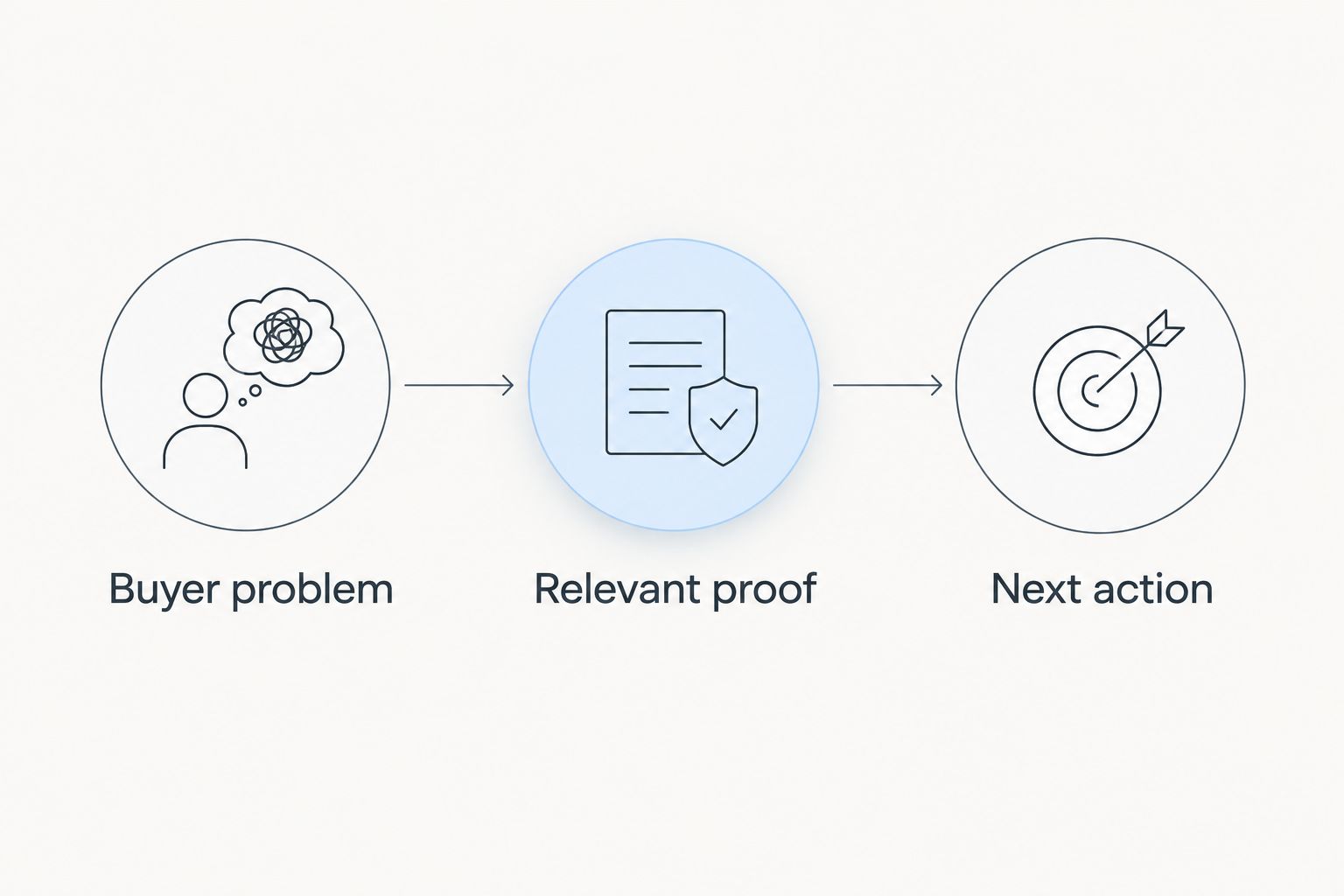
For a founder website in 2026, organize the main explanation around Buyer problem, Relevant proof, and Next action. A visitor should not need to read your entire biography to understand whether your work fits their situation. Put your story where it strengthens that decision.
Bridgetbakerbranding Squarespace website design is an agency option when you want help creating the site rather than handling the build yourself. The trade-off is coordination: you still need to provide approved copy, accurate service details, and evidence. Decide who owns those inputs before the project begins.
- Buyer problem: describe the situation your service addresses.
- Relevant proof: place approved examples beside related claims.
- Next action: explain what an interested visitor should do.
- Check the mobile reading order and inquiry process.
- Remove competing calls to action from the main service explanation.
4. Collect evidence buyers can evaluate
Make a manual inventory of work you can discuss publicly. Useful evidence includes an approved client testimonial, a documented project example, a published article, or a speaking sample. Choose evidence that supports the service you are promoting, not merely the achievement you are proudest of.
Separate your contribution from the outcome. If you advised a client, describe the advice and its context; do not take credit for results you cannot substantiate. If an example has confidentiality restrictions, secure permission or leave it out.
You can also demonstrate your reasoning without making a performance claim. Explain how you approach a buyer’s recurring problem, what you check first, and which trade-offs matter. Label an illustrative example as illustrative so it cannot be mistaken for a client case study.
- Match each major service claim to supporting evidence.
- Ask permission before publishing identifiable client material.
- Describe your role accurately in collaborative projects.
- Preserve the original wording of approved testimonials.
- Explain the context and limitations of each example.
5. Choose a visibility channel you can maintain
Start with a channel where you can explain your work in a format you can sustain. That might mean writing, professional conversations, speaking, or another format suited to your expertise. Choose based on your actual buyer conversations and working preferences, not the pressure to appear everywhere.
Set a trial boundary rather than an indefinite commitment. For your 2026 plan, review one chosen channel after 30 days of consistent activity. That is a suggested review interval, not a promised timeline for results. Ask whether the work creates relevant conversations and whether you can maintain it alongside client delivery.
Turn recurring buyer questions into useful explanations. A post about how you diagnose a problem can connect directly to a service explanation; a general motivational post needs a clearer purpose. Visibility coaching becomes relevant when you want help choosing your direction and sustaining the work.
- Choose one primary channel for the initial trial.
- Collect questions from real conversations with prospective buyers.
- Publish explanations connected to your service and evidence.
- Record relevant replies, introductions, and inquiries.
- Stop activities that consume time without serving a defined purpose.
6. Align every public introduction
Review your website introduction, social biography, email signature, and speaking biography side by side. They do not need identical wording, but they should describe the same audience and core work. A founder who sounds like a different business on each channel makes the buying decision harder.
Keep a short version and a longer version of your introduction. The short version identifies your work; the longer version adds relevant context and evidence. Adapt the emphasis for the setting without inventing a new positioning statement every time.
Visual consistency matters after the message is settled. Use a repeatable approach to photos, typography, and presentation rather than treating every post as a new design project. This is a workflow recommendation, not a requirement to redesign everything at once.
- Compare your introductions in a single document.
- Use the same core service description across channels.
- Update outdated role titles and service claims.
- Keep approved short and long biographies ready to reuse.
- Check that each public profile points toward an appropriate next action.
7. Measure inquiries and revise the message
Begin with a spreadsheet; a new platform is not a prerequisite. Record where inquiries came from, what buyers asked for, and whether the work matched your service. Keep personal information only where appropriate and avoid collecting details you do not need.
Use a 3-question review: Did the inquiry fit your audience? Did the buyer understand your service? Did the conversation move toward a useful next step? These questions diagnose message quality more directly than a follower total alone.
Set a monthly review for the remainder of 2026. If buyers repeatedly misunderstand your work, revise the service explanation before increasing publication volume. If inquiries fit but do not progress, examine the buying conversation rather than assuming your public brand is the problem.
- Record the source of each inquiry when the buyer provides it.
- Note the service requested and its fit with your offer.
- Save recurring questions for future website explanations.
- Review which evidence buyers mention during conversations.
- Change one part of the message before assessing the next revision.
Compare personal-branding options for your situation
Choose the kind of help that matches your bottleneck. DIY is best for clarifying your thinking; specialist help is best for a defined task; agency support is best for connected branding and website work. None removes the need for your decisions, source material, and approval.
| Option | Best for | Main advantage | Key limitation |
|---|---|---|---|
| DIY foundations | Founders still defining their buyer and offer | Direct control over research, drafting, and revisions | You own the strategy and execution workload |
| Focused specialist | Founders with a settled brief and one defined need | A bounded assignment with a clear deliverable | You coordinate consistency with the rest of your brand |
| Bridgetbakerbranding agency support | Founders seeking branding, Squarespace website design, and visibility coaching | Relevant services from an agency serving founders and other personal-brand businesses | You still supply accurate business facts and approve the direction |
Compare scope rather than assuming every option solves the same problem. A website assignment and a positioning assignment require different inputs. Before engaging support, clarify the deliverables, your responsibilities, the review process, and what remains outside the assignment.
Common mistakes solopreneur founders make
- Leading with every professional identity. A coach, author, speaker, and founder can be the same person, but a buyer still needs a primary reason to engage. Lead with the work relevant to that buyer.
- Designing before defining the offer. Visual choices cannot explain a service you have not articulated. Settle the audience, problem, and next action before revising presentation.
- Publishing beyond delivery capacity. A demanding content plan competes with client work in a solo business. Choose a schedule you can maintain without neglecting existing commitments.
- Using biography as evidence. Credentials and experience provide context, but they do not automatically substantiate every service claim. Pair claims with relevant, approved examples.
- Treating every inquiry as success. An inquiry for work you do not offer identifies a message problem. Track fit as well as volume.
FAQ
What is personal branding for solopreneur founders?
Personal branding for solopreneur founders is the deliberate presentation of your expertise, values, and work to attract appropriate buyers. It connects your positioning, website, evidence, and public visibility.
How do I start building a personal brand when I work alone?
Start by defining one buyer situation, the problem you address, and the service you provide. Write that down before choosing visual styles or expanding your posting schedule.
Do I need a website before building my personal brand?
You do not need a website to define your positioning or explain your expertise. A website gives you a place to present your service, supporting evidence, and next action together.
Is DIY personal branding better than hiring an agency?
DIY is better for clarifying your initial thinking; agency support fits connected work you want help executing. Choose based on the assignment and your capacity, not on the assumption that hiring removes your responsibilities.
Can I promote coaching, speaking, and writing under one personal brand?
Yes, when those activities connect to a clear audience or area of expertise. Give each buyer a direct explanation of the relevant service instead of presenting every activity with equal emphasis.
How do I know whether my personal branding is working?
Check whether inquiries fit your intended audience and whether buyers understand your service. Record recurring questions and use them to improve your public explanations.
Should my personal brand change in 2026?
Change your personal brand when your audience, offer, or evidence changes, not simply because the calendar does. Review your public introductions and remove claims that no longer describe your work.
One last thing
Before approving a redesign, ask someone unfamiliar with your business to read your homepage draft. Then ask them to describe who you help, what you do, and what they would do next. Compare their answer with your brief—not with whether they liked the design.
Fix the misunderstood sentence before adding another channel. That is a smaller, clearer action than trying to compensate for an unclear offer with more visibility.